Hospitals can’t gamble with power. Every second matters. A brief voltage drop can knock out imaging systems. A blackout can interrupt surgery. And each year, the aging grid grows more unstable.
The essential energy strategy for 2026? Hybrid microgrids.
These systems combine solar, batteries, fuel cells, and backup generators into one seamless platform. If one source fails, another takes over. The result: uninterrupted power tailored to your facility’s critical needs.
“Hybrid systems aren’t mutually exclusive. A microgrid can use solar, battery, diesel, fuel cells—whatever fits the facility’s needs. If the diesel fails, the battery or solar picks up the slack. Redundancy is built in. Why bet your operation on a single generator?”
— Dr. David Bliss, CEO, Faraday Microgrids
For hospital leaders, this isn’t about adding solar panels. It’s about protecting patient care, financial stability, and operational continuity, no matter what happens to the grid.
A Faraday hybrid microgrid is engineered for that exact outcome.
This is energy resilience, made essential.
What Is a Hybrid Microgrid?
A hybrid microgrid is a smart energy system that combines multiple power sources both renewable and traditional, into one reliable setup. It can work alongside the utility grid or operate on its own during an outage.
For hospitals, that means 24/7 power with built-in backup and flexibility.
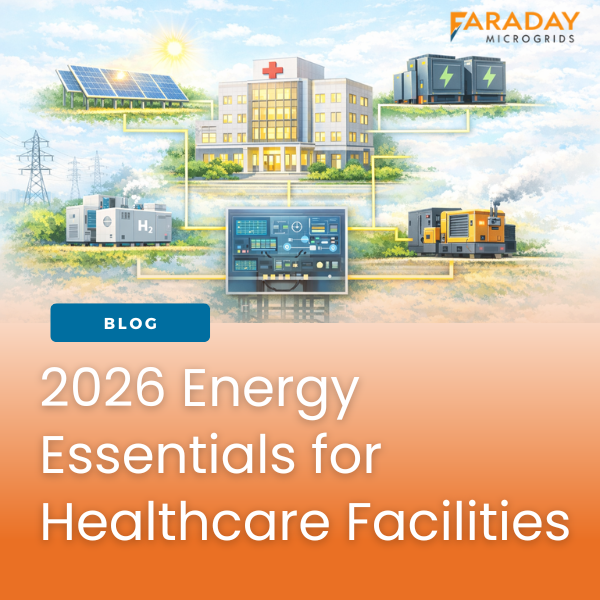
A typical hybrid microgrid includes:
- Solar panels for clean daytime energy
- Batteries for instant backup and smooth transitions
- Fuel cells for steady, low-emission power over long periods
- Diesel generators for emergency support and peak demand
- A microgrid controller that manages all of it automatically in real time
By blending these technologies, the system doesn’t rely on just one source. It constantly adapts to keep your facility powered, protected, and running efficiently, no matter what’s happening on the grid.

Why Healthcare Facilities Need Hybrid Microgrids
Healthcare energy needs are unique. Loads are large, sensitive, and mission‑critical. Most hospitals still rely on aging generators, often untested until the moment they’re needed. That risk is unacceptable in today’s operating environment.
Hybrid systems address the four biggest energy challenges hospitals face:
1. True Redundancy: No Single Point of Failure
Unlike traditional backup systems that rely on a single generator, a hybrid microgrid uses multiple energy sources such as solar, batteries, fuel cells, and generators that work together to provide seamless layered protection even if one component fails.
2. Fast Response + Long Duration Power
Hospitals need both speed and endurance during an outage, which is why hybrid microgrids combine the instant response of batteries with the long duration power of generators and fuel cells, while solar reduces fuel use and extends runtime, all working together in one resilient and integrated system.
3. Better Power Quality for Sensitive Medical Equipment
MRIs, surgical tools, and other critical technologies need clean and stable power. Hybrid microgrids improve voltage and frequency stability, filter out electrical noise, and protect against surges and sags to help prevent equipment damage and costly failures.
4. Lower Operating Costs and Reduced Emissions
Hybrid systems automatically manage energy by using solar during the day, batteries to handle peak demand, fuel cells for steady clean power, and generators only when needed. This balanced approach lowers costs and helps hospitals reach their sustainability goals more quickly.
How Hospitals Can Get Started with a Hybrid Microgrid
Step 1: Evaluate Your Facility’s Needs
Faraday conducts a detailed energy and resilience assessment to understand your loads, risks, and operational requirements.
Step 2: Design a Hybrid System That Fits Your Facility
Solar, batteries, fuel cells, and generators are combined based on what your hospital actually needs. No generic packages. Just the right fit.
Step 3: Deploy the Microgrid and Real Time Monitoring
Faraday manages everything from design and permitting to engineering, construction, and commissioning. Monitoring is included so your team has full visibility into system performance.
Step 4: Experience Reliable, Affordable, Sustainable Power
Your facility gains cost savings, reduced risk, and true energy independence.
Ready to protect your facility with 24/7 resilient power?
Schedule a free energy resilience assessment with Faraday and discover how a custom hybrid microgrid can cut costs, reduce risk, and keep your hospital powered through anything.
👉 Schedule Your Assessment Today