When the power goes out, your facility can’t afford to go dark.
Whether you manage a hospital, manufacturing/processing facility, or data center, uninterrupted power is critical. Yet traditional backup systems, especially diesel generators, are expensive to maintain, inefficient, and increasingly unreliable. That’s why more facility leaders are turning to microgrids: custom energy systems designed to deliver 24/7 power reliability and real financial returns.
But what happens after the installation? How do you make sure your microgrid keeps performing year after year?
In this guide, we’ll walk through how proper microgrid maintenance ensures maximum efficiency, long-term resilience, and a lower total cost of ownership—especially when compared to diesel generators.
Why Microgrid Maintenance Matters
The promise of a microgrid isn’t just about resilience during blackouts; it’s about operational excellence, energy savings, and peace of mind.
Microgrids combine on-site energy resources (solar, batteries, fuel cells, and generators) to provide clean and consistent energy, giving your facility control over its energy future. But like any system, performance hinges on routine maintenance and proactive management.
The good news? Microgrids require far less maintenance than traditional diesel systems. But ignoring small tasks can still lead to degraded efficiency, reduced savings, and unexpected outages.
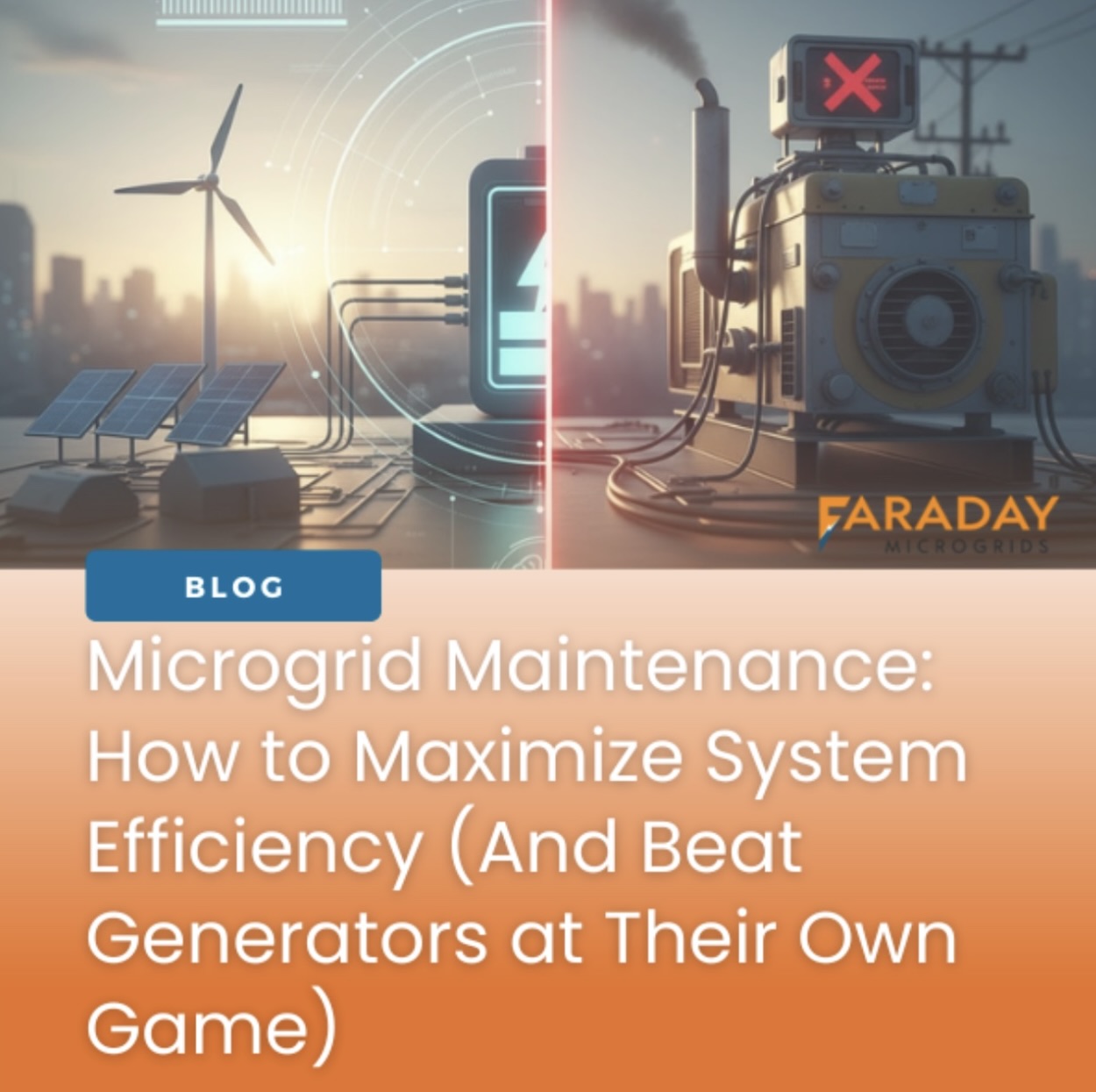
Diesel Generators vs. Microgrids: A Maintenance Reality Check
“Diesel generators need maintenance constantly—fuel filters, valve inspections, emissions testing. You can even grow bacteria in diesel fuel. Hospitals must burn fuel just to test systems. It’s all cost, no return.”
— Dr. David Bliss, Co-Founder, Faraday Microgrids
Let’s compare what it takes to keep each system running:
| Maintenance Task | Diesel Generator | Microgrid (Solar + Batteries) |
| Monthly testing | Required (burns fuel) | Not required |
| Fuel management | Yes (fuel quality degrades) | None |
| Emissions testing | Regularly mandated | Not required |
| Mechanical inspections | Frequent (moving parts) | Minimal (little to no moving parts) |
| ROI | $0 – stranded asset | Daily value from solar & storage utilization |
| Cost over 10 years | High (O&M + fuel) | Low (minimal maintenance) |
The takeaway? Generators are money pits that only perform during an outage. Microgrids are assets that provide backup power and constant electricity savings.
Microgrid Missteps That Can Cost You
Even the best microgrid systems can underperform if not managed properly. Here’s what to watch out for:
- Assuming “set and forget”: Even low-maintenance systems need periodic checks.
- Neglecting software: Outdated energy management systems can lead to inefficiencies and missed savings.
- Poor documentation: Keep a log of all inspections, updates, and service activities.
- Untrained facility staff: Ensure your team knows how to interpret alerts and when to call for help.
Faraday’s SMART Approach to Ongoing Maintenance
The good news is, at Faraday Microgrids, we don’t just build systems, we build relationships. Not only are we able to provide operation and maintenance services, but our SMART microgrids are designed for:
- Simplicity: Minimal upkeep, intuitive monitoring dashboards
- Minimal Downtime: Systems are built to run 24/7
- Affordability: Lower total ownership costs than legacy systems
- Resilience: Seamless power during outages
- Transparency: Clear reporting and remote diagnostics
Need help maintaining your microgrid, or want a second opinion on an aging generator setup?
Our team provides ongoing support, remote monitoring, and expert guidance to ensure your facility gets the most out of every kilowatt.
The Bottom Line
Microgrids don’t just provide backup; they provide value.
From cold storage and hospitals to data centers and industrial campuses, smart facility leaders are ditching fuel-guzzling generators for cleaner, simpler systems that pay for themselves.
Maintenance isn’t a burden. It’s an opportunity to protect your investment and maximize savings.
📍 Ready to gain energy independence without the headache?
Schedule a Consultation Today →