The Hidden Risk Lurking in Your Backup Power Plan
Power failures aren’t rare events—they’re increasing. And for mission-critical facilities like hospitals, data centers, cold storage, and industrial campuses, relying on outdated backup solutions can be catastrophic.
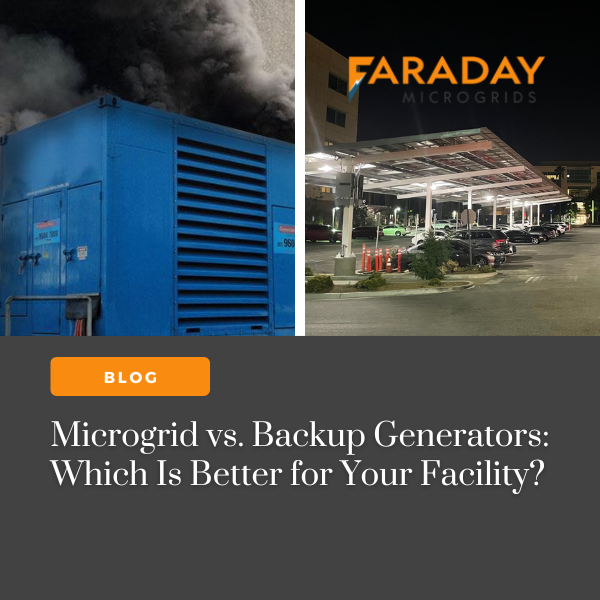
For decades, diesel generators have been the default. But they come with serious downsides: rising fuel costs, high maintenance demands, harmful emissions, and the looming risk of failure when you need them most.
“Diesel generators have been the go-to backup power for hospitals. But they come with a cost—expensive fuel, constant maintenance, harmful emissions, and the risk of total failure when you need them most.” – David Bliss MD, CEO, Faraday MicrogridsA smarter, more resilient alternative is gaining momentum: microgrids. Let’s explore how microgrids stack up against traditional backup generators—and why facilities across the country are making the switch.
What’s the Difference Between a Microgrid and a Generator?
Backup Generators:
These systems typically run on diesel or natural gas and are designed to activate during outages. They sit idle most of the year, springing to life only during emergencies.
Microgrids:
Microgrids are decentralized energy systems that integrate solar panels, battery storage, fuel cells, and intelligent controllers. They can run in tandem with the grid or independently, providing both everyday savings and backup power.
The key distinction: Microgrids are active, multi-source systems that deliver value every day—not just when the grid fails.
Total Cost of Ownership: Microgrids vs. Generators
Diesel Generators:
- Lower upfront costs
- High fuel and maintenance expenses
- Limited lifespan (10–15 years)
- Idle asset when not in use
Microgrids:
- Higher initial investment (offset by tax incentives)
- Low operating costs
- 20–30 year lifespan with proper maintenance
- Delivers year-round energy savings
Which Is Right for Your Facility?
If your facility has minimal resilience needs, a tight upfront budget, and the capacity to manage fuel storage and maintenance compliance, traditional generators may suffice. However, if uninterrupted operations are critical—such as in hospitals, data centers, cold storage, or university campuses—a microgrid offers a smarter, long-term solution. Microgrids provide continuous power, deliver strong ROI through energy savings, and help meet sustainability mandates, making them ideal for facilities that demand both reliability and environmental responsibility.
The Future of Backup Power Is Smart, Not Static
Microgrids are not just a replacement for backup generators—they’re a leap forward in how facilities think about power. By delivering both daily value and emergency reliability, they represent the future of backup power.
Your 3-Step Plan to Smarter Backup Power
- Engage: Schedule a no-pressure consultation.
- Execute: Let Faraday design and deploy your tailored microgrid.
- Enjoy: Energy savings, reliability, and energy independence.