
Skip to content

Faraday Microgrid Tiers — Resilience

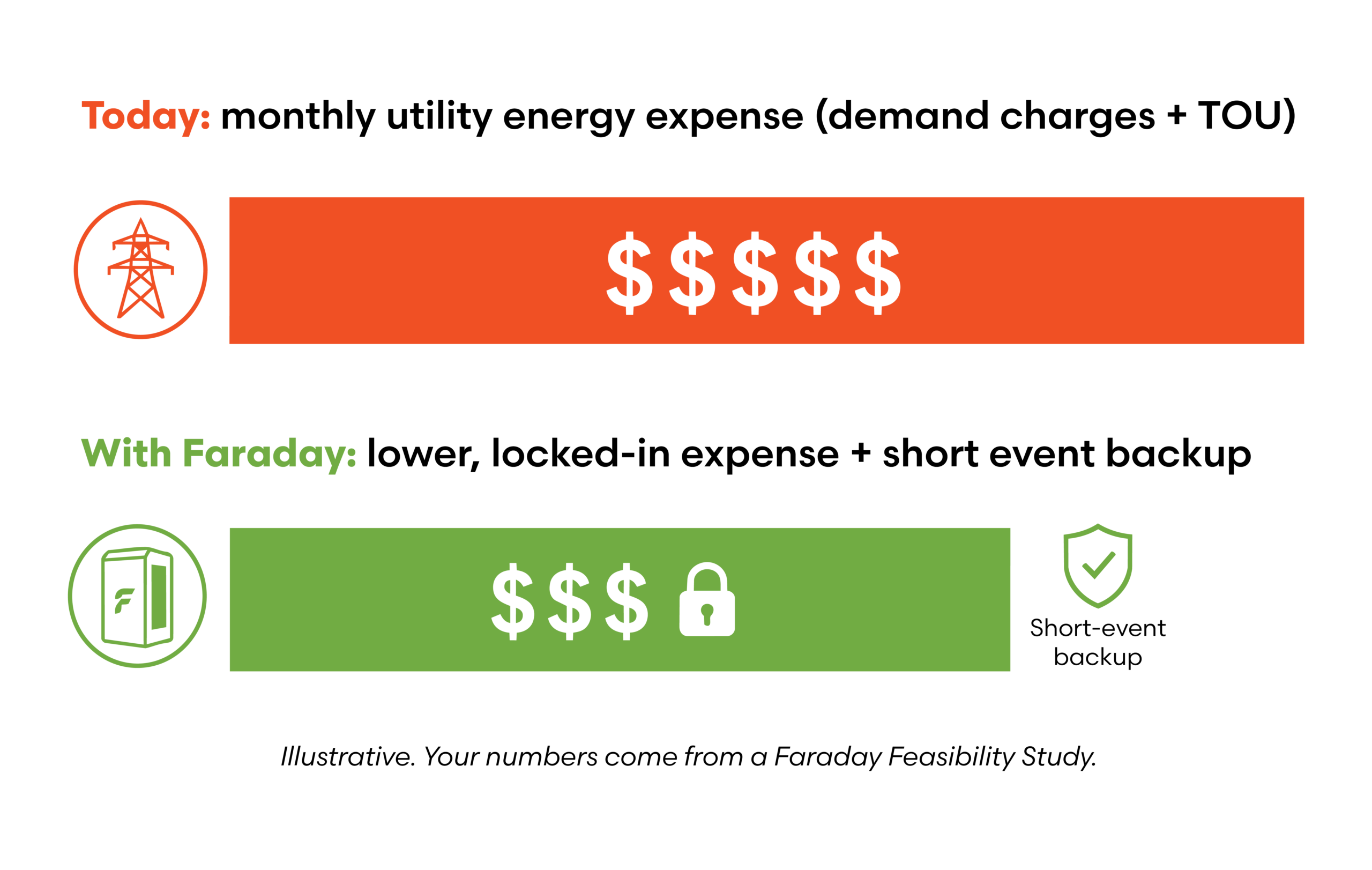
Cut your demand charges. Lock in the price. Short outage backup included.

Cut demand charges and time-of-use exposure with Faraday solar + battery storage microgrid, with 1–4 hours of automatic backup on selected critical loads that are paid as one operating expense via PPA or equipment lease. No capex required.

Resilience is engineered for California locations whose energy bills are primarily composed of demand charges.
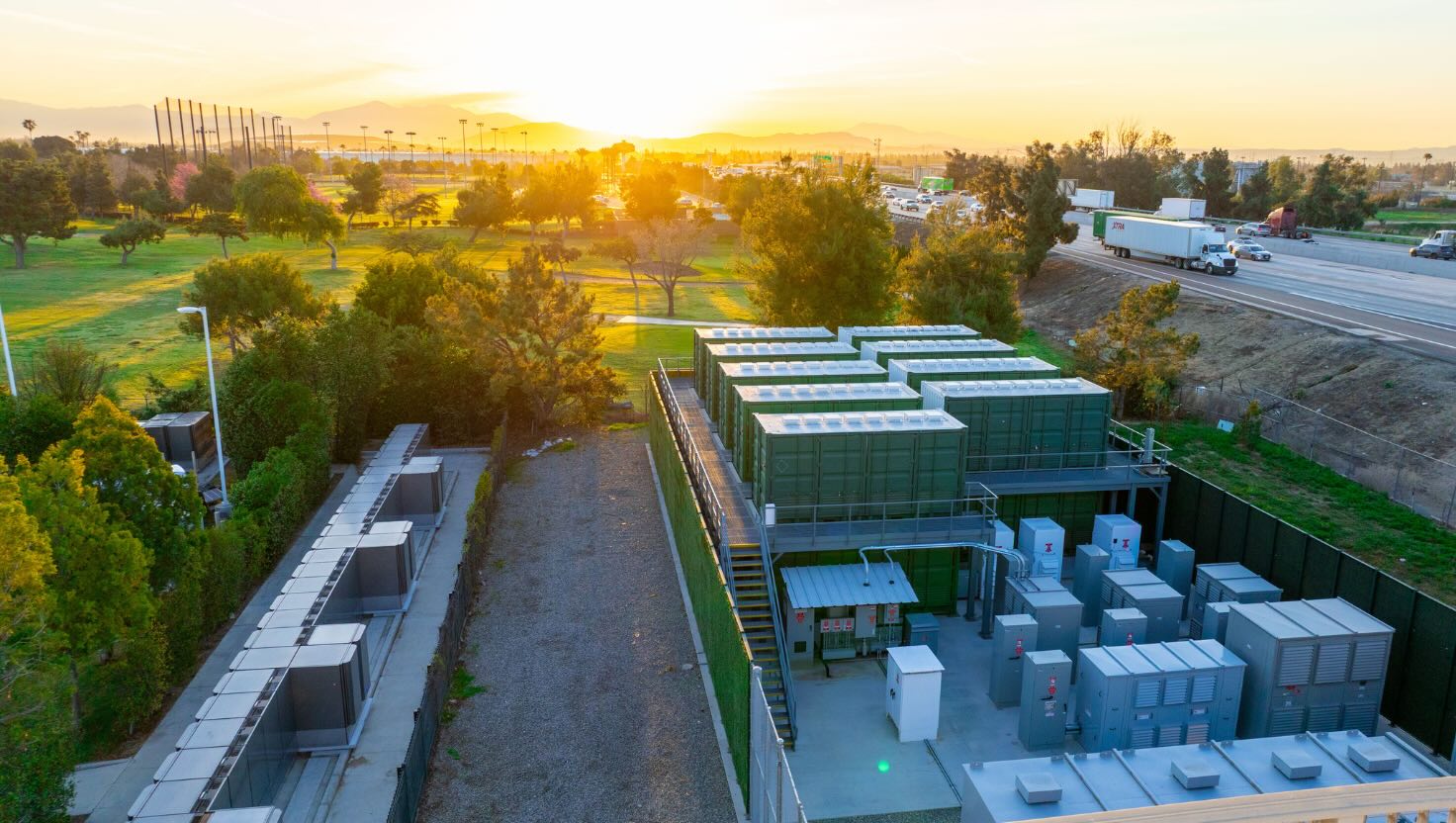
Faraday Resilience caters to four scenarios where demand charges are the main line item on the energy bill; where there is good solar generation alignment during daylight; and where short-term backup power, between 1 to 4 hours for certain critical loads, will suffice. The pattern? A location that consumes 200 kW peak demand or above and is capable of enduring a 1 to 4-hour outage without any major impact on its operations.

Light Manufacturing & Fabrication

Manufacturing, assembly, and fabrication where demand charges from CNC equipment, compressed-air systems, and process motors dominate the utility bill. Daytime production schedule aligns well with solar generation. Outage tolerance is meaningful — most operations can absorb a 1–4 hour grid event without material disruption to throughput or quality.

Multi-tenant Commercial & Office

Office buildings, mixed-use commercial properties, and multi-tenant industrial parks where the building owner pays demand charges on shared HVAC, common-area lighting, and base-building systems. Daytime occupancy patterns drive load that aligns with solar production. Critical-loads backup typically covers life-safety, security, partial common-area lighting, and partial HVAC for short events.

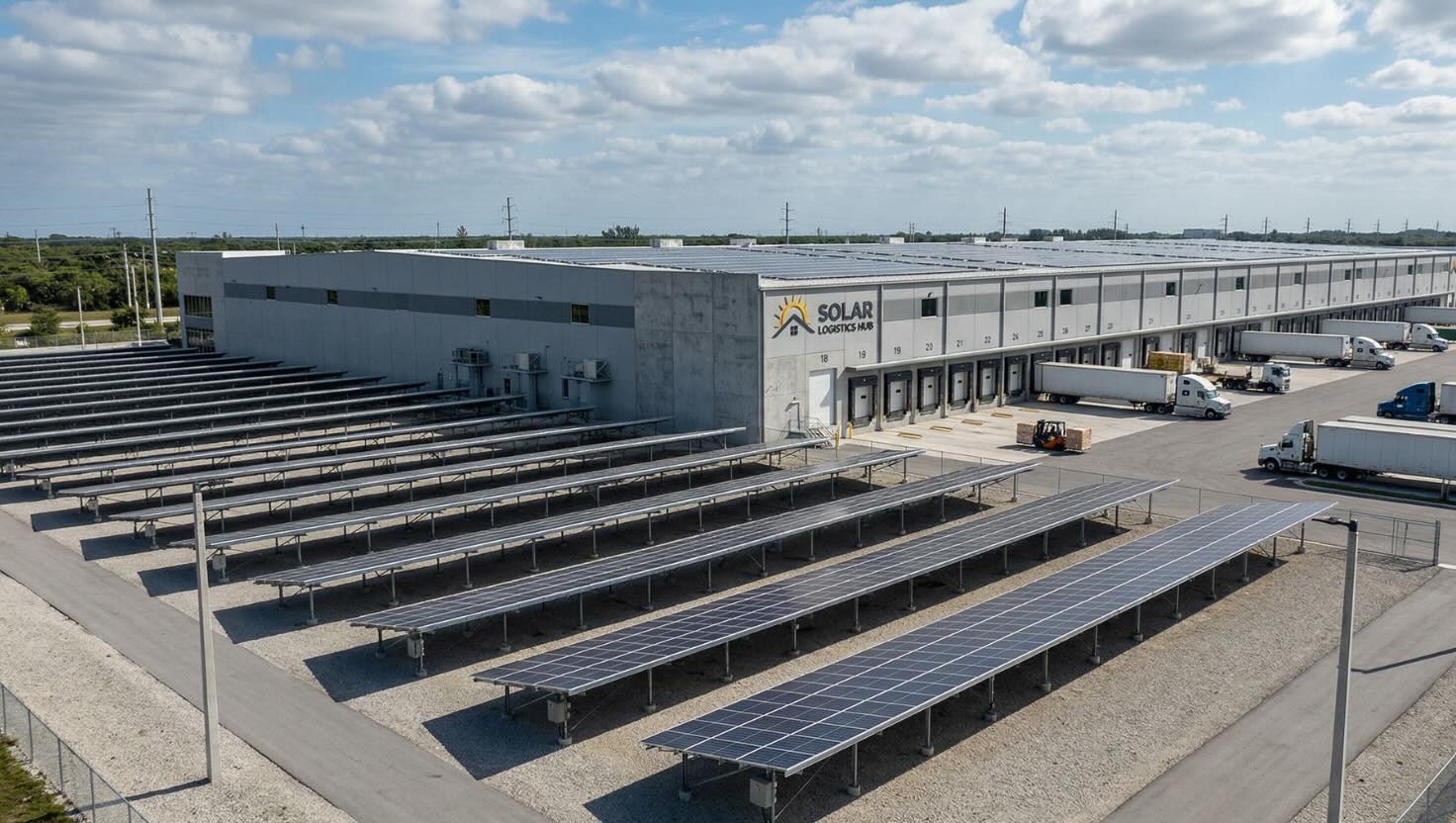
Distribution & Warehousing

Non-refrigerated distribution centers, dry-goods warehouses, and fulfillment operations. Demand charges scale with material-handling equipment, lift trucks (where electric), and lighting load. Outage tolerance is meaningful when the operation isn’t temperature- or process-critical. (Refrigerated and cold-chain operations belong in the Endurance tier)
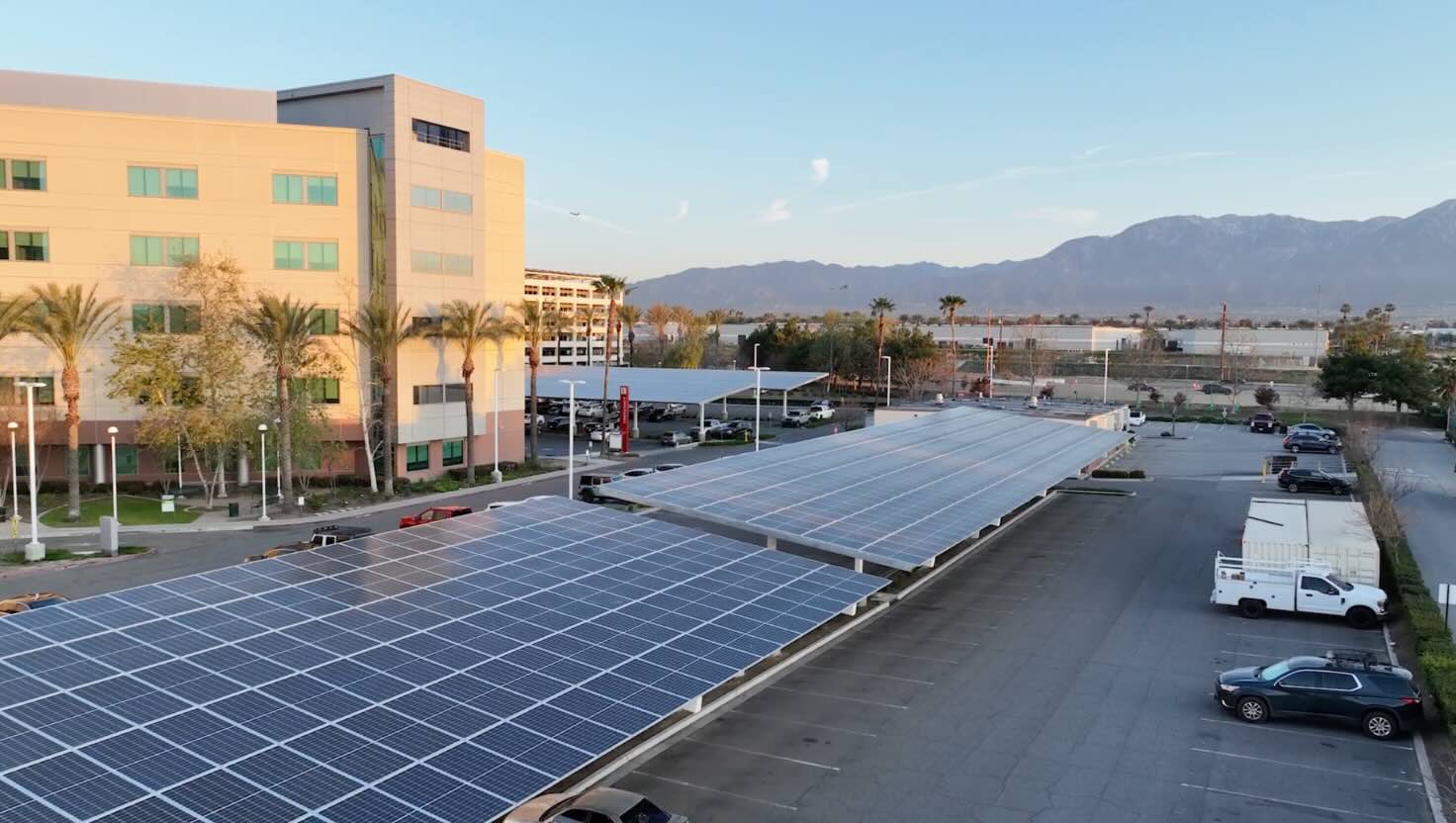
Retail & Hospitality

Grocery-anchored retail centers, big-box retail, and mid-format hospitality properties. Demand charges driven by HVAC, refrigeration where present, and lighting load align with daytime occupancy. Short-event backup keeps critical operations running — life-safety, point-of-sale, partial refrigeration — while the broader facility manages graceful disruption.
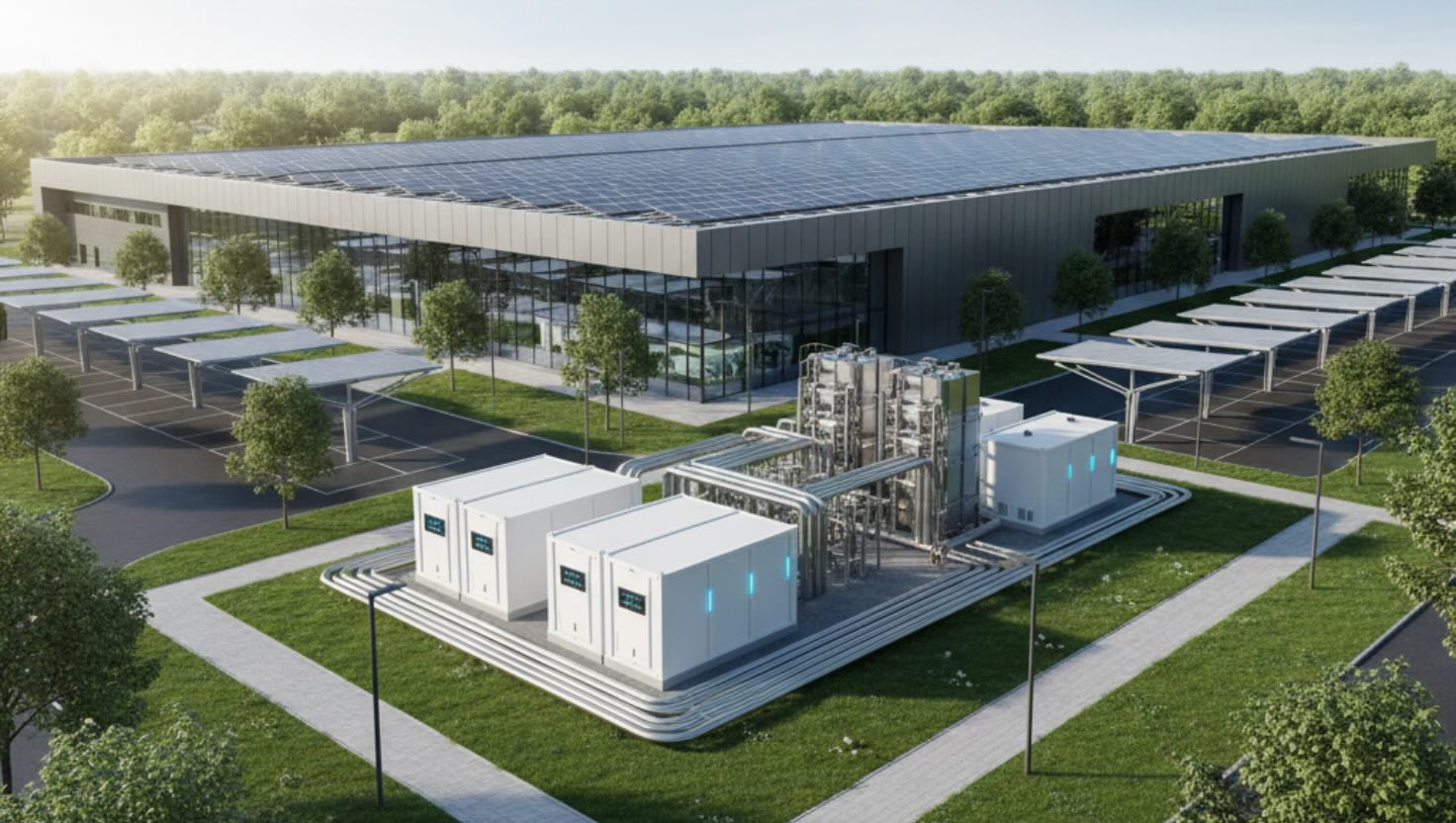
The contents of a Faraday Resilience system.

System Components

  • Solar PV — sized according to the facility load requirements and available roof or ground-mount space.
  • Battery storage — sized to cover daily peak-shaving, time-of-use arbitrage, and 1-4 hours of emergency battery power on selected critical loads.
  • Islanding-capable inverter and protective controls — automatic switching off of utility connection during outages and automatic reconnect upon utility power availability. No user action required.
  • Critical-loads partitioning — switchgear and panel configurations used to separate selected critical loads from normal operation.
  • Monitoring, controls, and (under PPA / lease) remote operations — Faraday will operate the system on your behalf should the system be acquired using either PPA or equipment lease contracts.

How it works

On a typical day, power generated from the solar system powers the plant directly, while excess power generated is stored in the battery. The battery dispatches during expensive on-peak hours to reduce energy charges, and shaves peak demand to reduce demand charges. Demand and on-peak charges account for most of the cost of a California business’s bill; this is what makes Resilience valuable to businesses each non-outage day.

Resilience can be engineered with upgrade hooks, oversized battery enclosure footprint, spare DC string capacity, controller provisions for battery expansion so a future move to Endurance-class runtime is incremental hardware rather than a full system rebuild. The Feasibility Study identifies whether upgrade-readiness fits your site profile and budget.

Lower demand charges. Lower TOU exposure. Backup included.

In case your site falls under any of the four Resilience profiles, then your utility charges will be made up largely of two elements. These are demand charges (highest 15-min peak charge in a month, priced in dollars per kW) and energy charges during the on-peak times (kWh consumed during costly evening and afternoon periods). They make up the lion’s share of any California commercial utility invoice.

Under PPA or equipment lease, a Faraday Resilience microgrid is not a capital project. Your operating cost for the energy that your facility currently pays the utility company on a monthly basis forever is replaced with an operating cost that you pay Faraday, and it includes short-event backup coverage for certain loads all in one line item.

Why “it’s just a battery” or “it’s just solar” is shortchanging you.

For most commercial customers in California, comparing the Faraday Resilience system means comparing it to four others. They each provide a piece of what Resilience provides, but not the whole thing.

A battery alone

Installers that use batteries alone sell a product; whereas Faraday provides a full-fledged system. An installer selling a battery-only installation will set up the system to minimize the bill only but won’t design it for the island mode during an outage. Retrofitting a battery-only installation for islanding involves changing the inverter, in addition to installing a dedicated panel for the critical loads. These changes are costlier compared to designing an islanding facility when installing. This reason has motivated Faraday to include islanding capabilities in all its Resilience installations even for lower-budget facilities since this will be cheaper when installing than retrofitting.

A generator alone

Your standby generator sits idle 99% of the time. It creates value only when the power goes out and has no value any other day. While this, your company still continues to pay the same cost of electricity plus demand charges even in months when there are no power outages. Resilience solves that problem by arbitraging peak energy charges and reducing demand charges on good grid days while also providing backup power in case of short outages.

Solar alone

Solar systems without storage generate power during the daytime and then export excess energy at the recently introduced Net Billing Tariff level, which is estimated to be about 75% cheaper than the export payments made in the previous NEM 2.0 arrangement. Economic importance has been transferred from solar for exporting power to solar with storage for consuming power on site. Solar by itself won’t even help during a power outage since, normally, such solar systems stop generating during a power outage.

A custom EPC running a one-off project

A customized microgrid engagement is a lengthy engineering process lasting several months with a unique pricing structure, uncertain timelines, and a non-contractable scope until the engineering process gets to an advanced stage. But for the commercial clients of California that are looking for a defensible decision, financial metrics and a clear scope of a project that can be contractually binding, then there is the Resilience solution, which comes with a 30-day Feasibility Study, a fixed scope installation contract, and a standardized PPA or lease agreement.

Need something with more than 4 hours of run time? Consider Faraday Endurance.

For all other commercial operations located in California where the demand charge impacts the bottom line and a brief loss of power in the neighborhood of 1–4 hours is acceptable, Resilience is the solution. But for certain operations that may include cold storage, food processing facilities, biotechnology operations, or mid-sized manufacturing plants, 4-12 hours of battery backup is required.

Faraday Endurance is a version of Resilience: solar, battery storage, and automatic islanding scaled up for extended outages. Endurance is Faraday’s core product offering and the tier most California commercial installations settle into. If you need a solution that can handle longer periods of downtime, then Endurance is the proper tier; Resilience is too small.

The Feasibility Study will define the cost-benefit ratio for your facility, incorporating your potential loss during outages, demand charge shape, and required battery size.

How Resilience gets paid for

Most Resilience installations are purchased under the Power Purchase Agreement (PPA) arrangement: Faraday owns and operates the solution; the host company pays a per-kWh cost for electricity generated and used on-site – an arrangement that offers savings on day one against existing utility costs. No up-front costs are involved.

Leasing the equipment is also an option if the host would prefer to lease because it provides greater tax advantage, or simply because of ownership preference. A set monthly cost, ownership after the agreement period, plus the full tax advantage in both federal tax credits (ITC) and depreciation (MACRS).

Purchasing the system outright is an option for those wishing to do so. Payback usually ranges from four to seven years with today’s ITC levels.

All of our Feasibility Studies examine each financing option based on specific economic considerations. The Feasibility Study takes you to your numbers.

Faraday’s pre-configuration removes the variability that makes commercial microgrid pricing feel risky.

A Faraday system design built at one facility has the same underlying system structure as one built at the next. The same control approach. The same islanding scheme. The same engineering. Varied sizing, varied loading profile, and varied rate structure, but a scoped-out project every time.

This uniformity is what makes it possible for Faraday to provide its clients with a 30-day, fixed-fee Feasibility Study, defendable pricing by tier, and a scope-fixed install contract. The reason that project-by-project EPC projects cannot be priced defendably is that each project is a new engineering challenge from the ground up. A productized project, on the other hand, can be.

Faraday’s engineering heritage includes the first islandable acute-care hospital microgrid in the US and its contributions to code revisions under NEC concerning microgrid construction. The Resilience tier is essentially an engineering feat scaled down.

Common questions about Resilience.

Resilience focuses its efforts on the two biggest charges seen on any average California business bill: demand charges (mitigated through battery-driven peak shaving) and on-peak power costs (mitigated through TOU arbitrage). Before taking into account the effects of financing, typical bill reduction percentages tend to be somewhere between 30% to 50%. If the customer enters into a PPA or equipment leasing arrangement, his or her percentage of savings will tend to fall somewhere between 10% to 20%, while the remaining benefits will accrue to the financier as compensation for taking on capital and tax risk.

Critical loads remain powered by batteries. In the Resilience category, there are features such as the islanding inverter, partition of critical loads, and protection mechanisms necessary to ensure selected devices remain operational throughout the entire blackout period, as it is disconnected from the grid in fractions of a second while supporting the panel with critical loads with batteries (and solar energy during daytime). On average, battery duration without any solar supplementation is about 1-4 hours.

Yes, but this is something that should be designed from the beginning. Upgrading from Resilience to Endurance will largely involve the addition of battery capacity as well as the management system required to handle the increased battery pack size. Assuming an upgrade to Endurance is feasible, then Faraday can design Resilience to accommodate an upgrade by oversizing the battery enclosure space as well as excess DC string capability and controllers capable of handling increased battery capacity. An upgrade with hooks will cost extra.

Costs for implementing a Resilience project will depend on the size of the building, quantity of solar, battery storage size, and breadth of resilience implementation. Faraday doesn’t provide project cost estimates since the Feasibility Study gives you the numbers for your specific location. In terms of project costs, under PPA/leasing, there’s no upfront investment required, as the owner pays a rate to cover their costs while saving money day one compared to existing electricity bills. On a cash basis, payback period usually falls into 4-7 years at current ITCS levels.

Find out if Resilience is the right fit for your site.

A free 30-minute screening call. If your facility is a fit, the next step is a 30-day, fixed-fee Feasibility Study — and the Study fee credits 100% toward your installation contract if you proceed.