
Faraday Industries — Healthcare & Institutional
Microgrid engineering for hospitals and institutions.
Faraday engineers mission-critical microgrids for California hospitals, universities, and public sector organizations. Some of our projects include the first hospital microgrid in the U.S. that is islandable, healthcare projects funded by CEC, and projects which contributed to changes in the National Electric Code. The process is different from our commercial pre-engineered process.
Healthcare and institutional projects differently involve Faraday.
We design our commercial projects using pre-engineered and fixed-scope levels since the normal commercial property in California requires such approach. However, hospitals, universities, and public agencies do not. There are three factors behind this.

Scope defined by codes
Hospitals have their essential electrical system governed by the provisions of NEC Article 517 and NFPA 110. Universities and institutions, besides the above mentioned, have additional layers of code (IBC, CBC, and AHJ-specific amendments). Scope of the essential power project does not become a client's request; rather, it becomes a requirement of a code.

Exposure for continuity of operations
A defined “essential electrical system” actually exists because exposure is there — Joint Commission EOC, CMS CoPs, accreditation, life safety, and operations continuity. An outage at a hospital, a vivarium research lab, a 911 dispatch center, or a sewage treatment plant is not a loss of production issue — it’s an issue of continuing the mission. Decisions are made through that lens.
Reality of procurement and funding
Healthcare and Institutional Microgrids for California Healthcare go through CEC, CHPS, DOE, Budget or Public Procurement process – all of which have their own timeframes, criteria and conditional engineering. Off-the-shelf pre-engineered commercial tiers cannot be utilized here.

Where Faraday has earned the right to do this work.
The work we’ve completed in healthcare informs how we engage every project today.
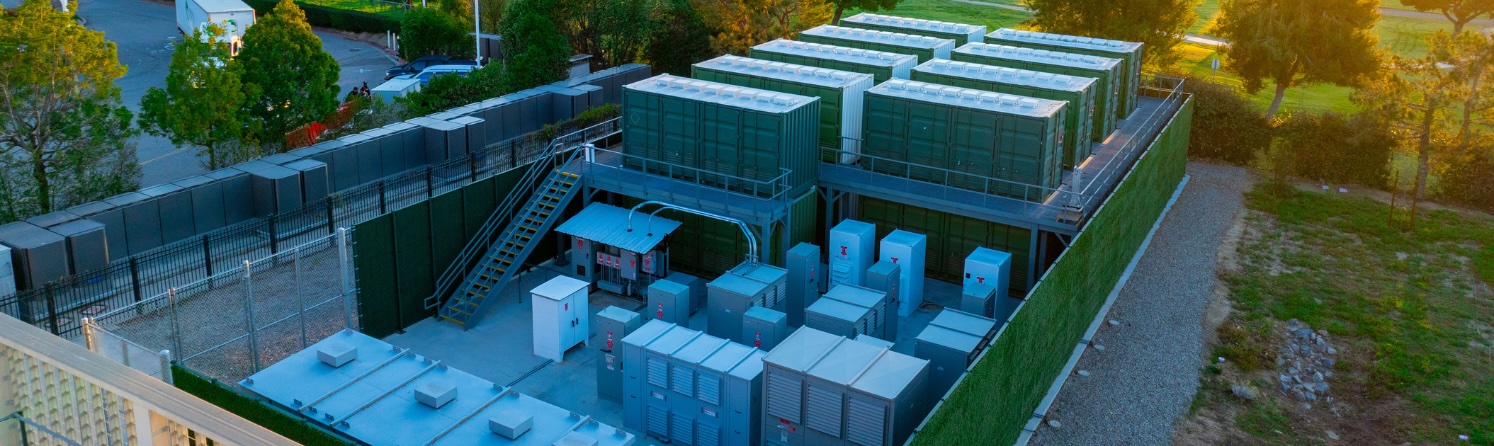
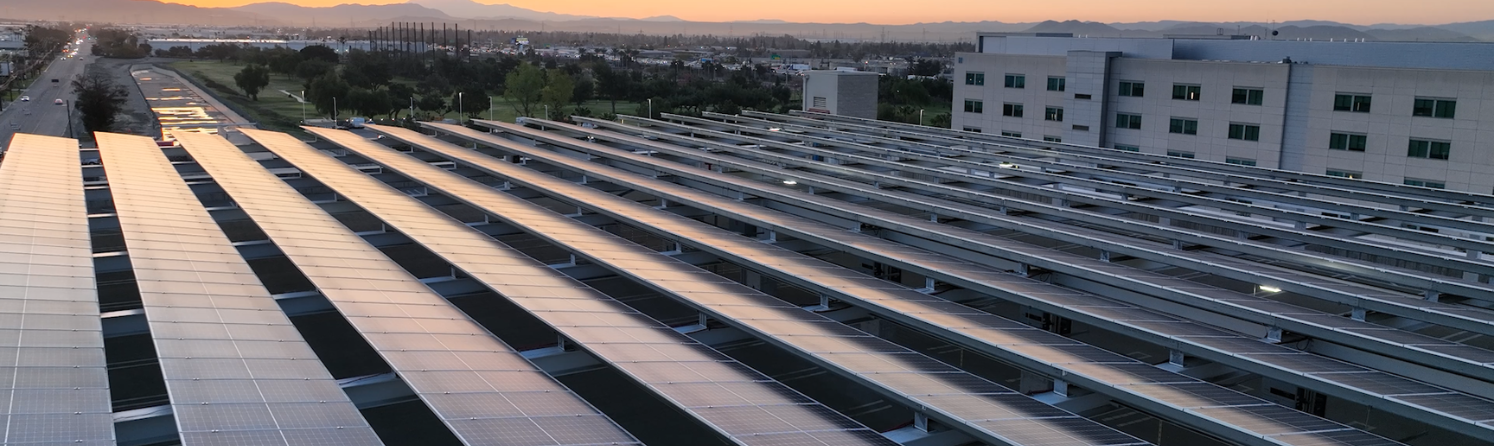
The first islandable acute-care hospital microgrid in the United States, completed at Kaiser Permanente Ontario Medical Center under CEC funding. The project demonstrated full islanded operation of a hospoital on solar, storage, and fuel cell. The microgrid design was unique enough that it contributed to the updating of the National Electrical Code. We can design the core electrical system of a hospital campus; we can design the core electrical system of your facility.
Contribution to NEC code change
Documentation from the Faraday project contributed to code changes in the NEC allowing microgrids to be used as emergency power sources for hospitals.
Track record on CEC-grants
A number of projects for hospitals and institutions that have been awarded CEC funding through the company’s history, including the Kaiser Ontario project.
Perspective of owner-surgeon in hospital
Dr. David Bliss, who is a surgeon, is one of the founders of the business. Perspectives on the hospital side is an intrinsic part of the leadership team, which is uncommon in this business.
How does the engagement process work?
Engagement in the healthcare industry and institutions begins with a discussion; not a fixed fee Feasibility Study; not a predetermined commercial tier engagement. Below are the various phases through which most engagements typically proceed.

Engagement conversation
This starts with a scoped conversation about the facility profile, code posture, continuity exposure, funding source (grant, capital program, public procurement), and partner firm coordination (EPC firm, facilities engineer consultant, code consultant). This usually takes 60-90 minutes followed by a follow up. No cost involved.

Project framing
Should the work continue, we develop a project framing document that includes scope definition, deliverables, milestone schedule, code compliance posture, and partner firm coordination plan. Project framing includes the specifics for a particular funding source (CEC application preparation, capital program scoping, public bidding process compatible) Fee depends on each project.

Engineering and design
The stage involves everything from engineering design to interconnection and permitting. Coordination with the facility’s current electrical engineer, MEP, and architect is the norm.

Construction, commissioning, and acceptance
Faraday designs, constructs, commissions, and assists with acceptance. Commissioning is consistent with the facility’s accreditation, code, and capital program commissioning requirements (Joint Commission EOC, NEC 517/NFPA 110 commissioning, CEC report, AHJ acceptance).
Frequently asked questions — institutional engagement.
Faraday is a California renewables developer and builder for renewable energy. The institutional and healthcare sector has been the most developed segment of our project portfolio, from the first islandable hospital microgrid in the U.S. to several CEC-funded healthcare projects. Additionally, we cover commercial pre-engineered work in the form of our Endurance, Resilience, Independence, and Strategic engagement levels – but institutional projects are engaged in a different way. The qualifications needed to engage with hospitals are legitimate and affect how we engage with all projects.
Commercial pre-engineered projects are driven by a fixed-fee Feasibility Study and configurable, fixed scope tier installations (Resilience / Endurance / Independence / Strategic). Commercial healthcare and institutional projects are driven by a project framing engagement that starts with scoping conversation and leads to project framing document, engineering of record, and construction/commissioning/acceptance process.
Yes. Faraday has a proven track record with both CEC-funded healthcare projects and institutional projects and we support grant application development, grant reporting, and grant conditional engineering. We have also worked with DOE-funded program scope and California institutional capital program scope. If you are looking at grant funding, we can work from that point in the process.
Yes – and often do. Our model allows us to be engineering-of-record, be microgrid-focused subcontractor under an existing EPC firm, or even work in conjunction with an existing facilities engineering consultant. It depends upon your project needs.
Standard scope on Faraday healthcare projects. Our commissioning documentation matches Joint Commission EOC, accreditation, NEC 517 / NFPA 110 commissioning, CEC grant reporting, and AHJ acceptance requirements. The engineering-of-record partner (Faraday or Mazzetti) carries primary documentation responsibility based on the project structure.
Yes – The Kaiser Permanente Ontario Medical Center is a Level 1 trauma center, the most mature of all our healthcare microgrid projects, and the first isolated hospital microgrid in the country. Visits and references are possible subject to necessary arrangements. Let’s start a discussion and make the arrangements.
Ready to start a healthcare engagement conversation?
No fixed-fee Study — institutional projects engage differently. Start with a scoped 60–90 minute conversation. We’ll walk through your facility, your code posture, your continuity exposure, your funding context, and your existing partner-firm structure.