
Skip to content

Faraday Industries — Cold Storage

Reliable Power. Protected Inventory. Energy bills that are smaller than before.

For refrigerated warehouses, distribution centers, and processors in California, the Faraday Endurance microgrid reduces your operating cost of energy, allows compressors and condensers to operate during interruptions, and turns a part of your energy bill into a predictable consistent monthly payment plan with no capital expense.

Why a generator isn’t enough on a refrigerated facility.

A diesel generator protects a refrigerated facility on paper. In practice, four cold-storage-specific patterns make the standard answer inadequate. Each is a place where Faraday’s Endurance approach — solar, storage, automatic islanding, and multi-hour battery support — does something a generator alone cannot.

Defrost cycle followed by compressor restart causes spikes in demand

Demand spikes caused by compressor restart after defrost cycles normally account for 30-50% of short-term spikes. Multiple unit restarts cause even bigger spikes. If you’re on the PG&E B-20 tariff or the SCE TOU-8 tariff, your demand spikes are charged according to the 15-minute peak rate. Battery energy storage will help smooth out all your spikes monthly. A generator cannot.
Half-load gap in power outages

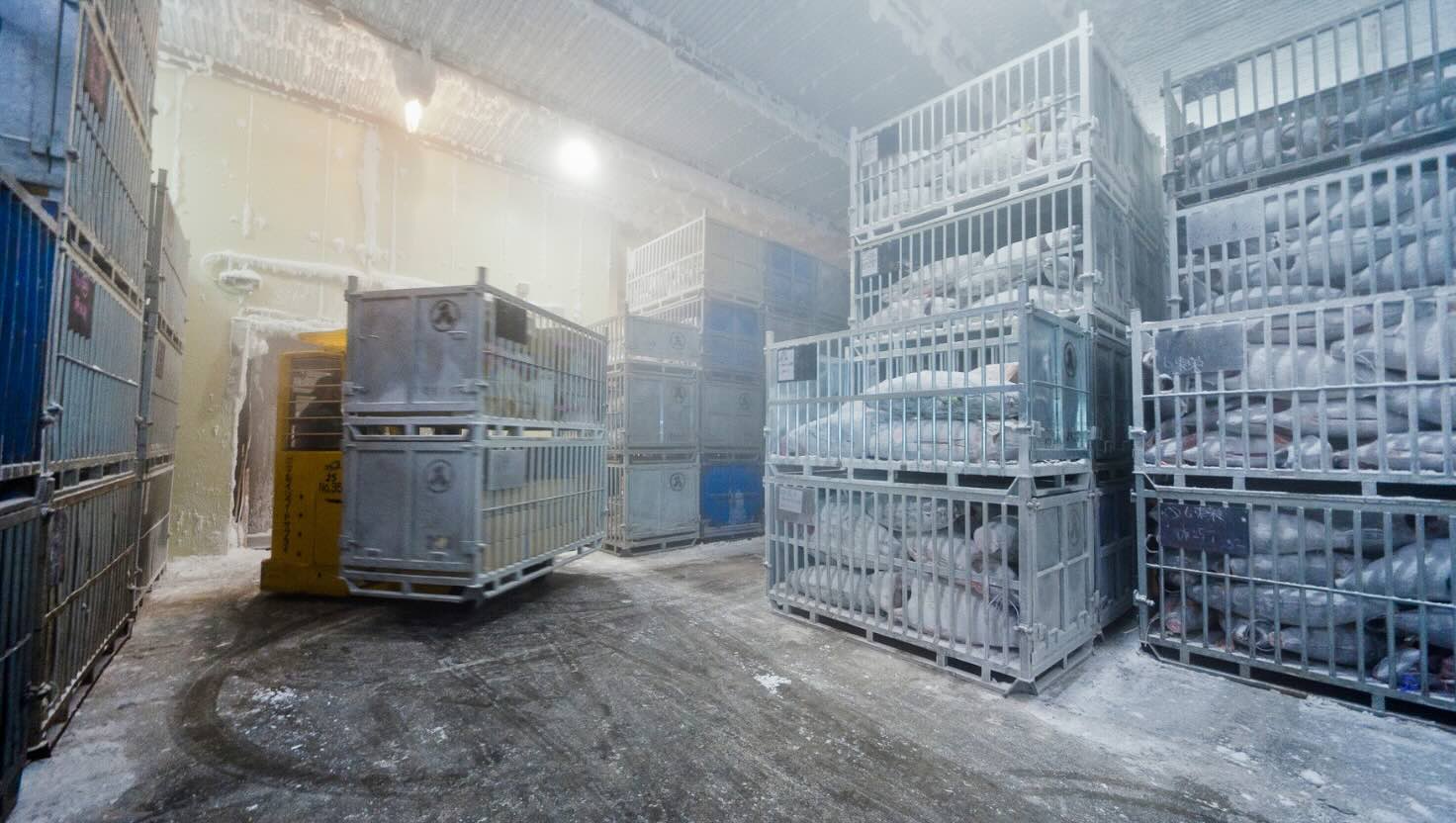
A typical refrigeration emergency power generator is designed to operate on a part-load envelope (typically 50 to 70% load level) in a cost-to-space trade-off decision, not because of a regulation. Loads are shed from the system during such an emergency power outage condition. Loads shed could be condensers, evaporator fan motors, or less important freezer spaces where temperature swings are likely to begin. With batteries and selective islanding, all critical loads will be served initially.
FSMA documentation risk in outages

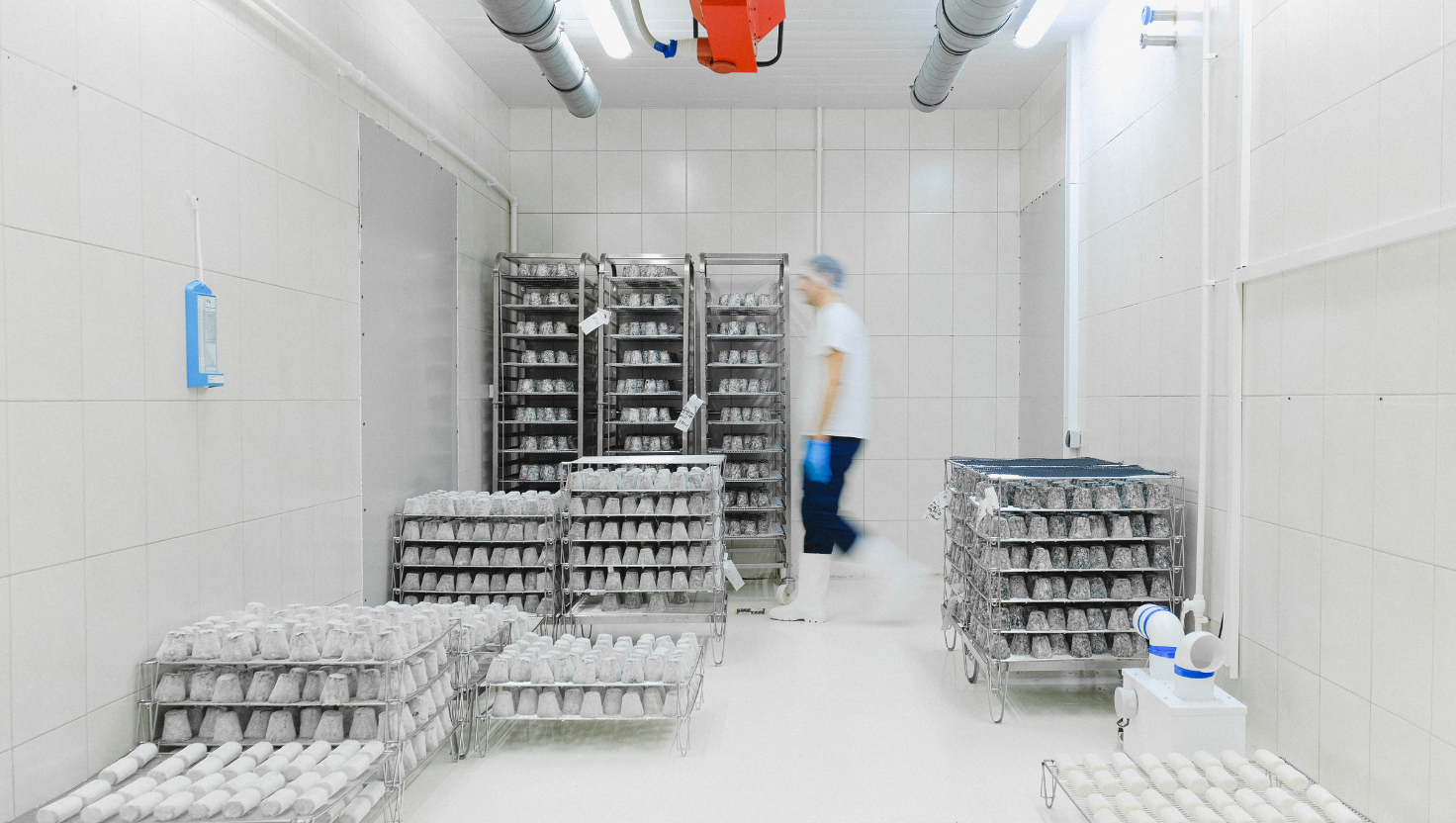
Under FSMA preventive controls regulations (21 CFR Part 117), temperature deviations in outages become documentation incidents for preventive controls, requiring corrective action reports, customer auditing, and even Reportable Food Registry filings in serious cases. A two-hour delay in starting up the generator in the case of a failure in the transfer switch becomes such a documentation incident rather than merely an inventory concern. Microgrids with islanding capabilities eliminate the need for such documentation.
Restart constraints for refrigerant systems

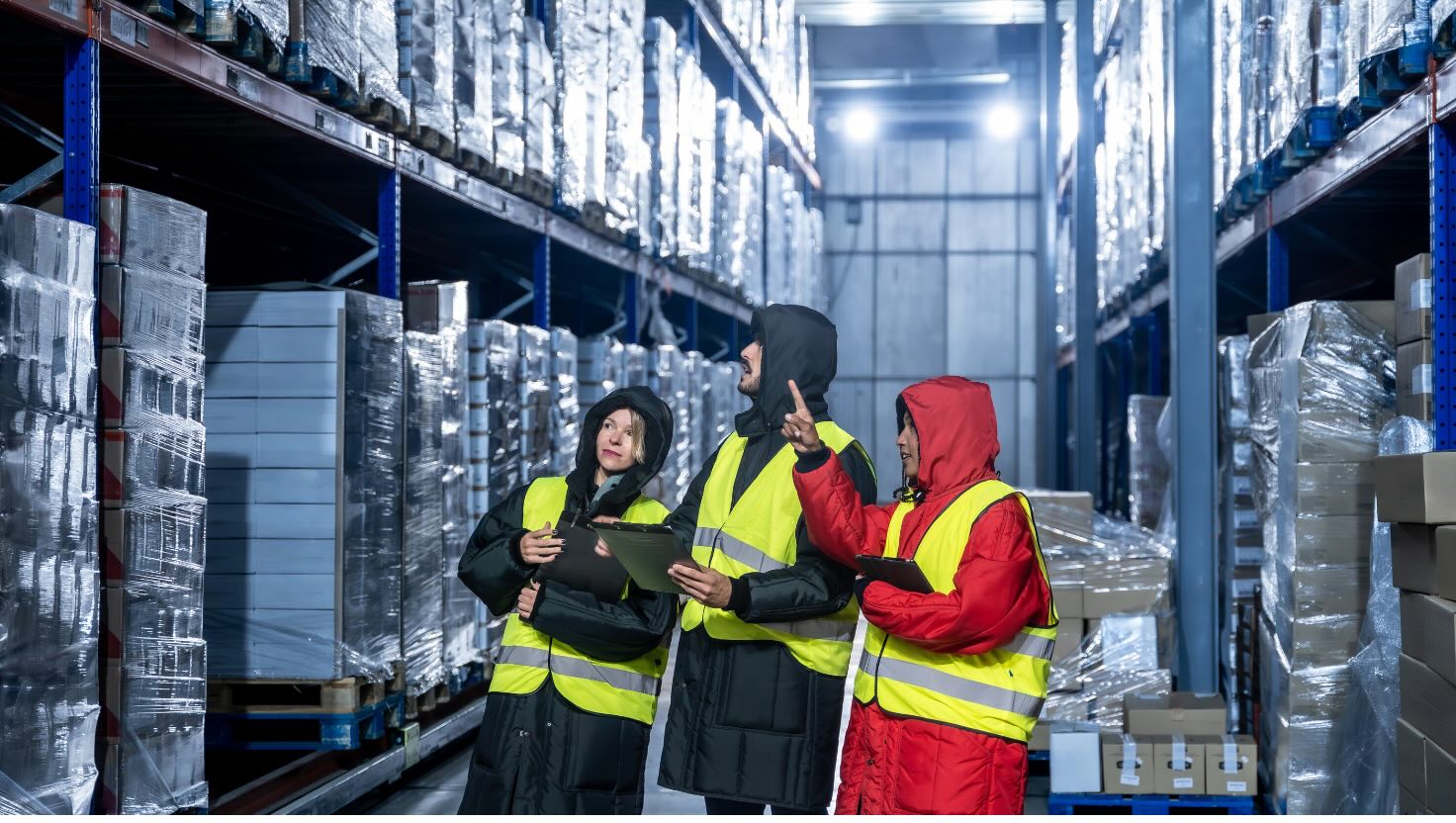
There are different constraints associated with starting up and operating refrigerant systems containing ammonia (NH₃), CO₂, and freon. For example, the constraint associated with the restart and running operation of ammonia systems is related to pre-lubrication of oil and ventilation sequence, whereas that associated with CO₂ systems is concerned with restarting and gas cooling operations at high pressure. Islanding controller design will take into account your refrigerant system restart and run-time constraints.

What Endurance changes about your monthly bill and your outage exposure.

Endurance is Faraday’s primary commercial tier. For a cold-storage facility, it translates into three operational outcomes that map to how refrigerated warehouses actually use energy and lose money to outages.

1

Peak shaving through demand charge rates.

The solar system reduces demand during peak hours on the bill; battery dispatch eliminates the demand peaks caused by defrosting and the restarting of compressors, which will form your peak demand for the month. On the B-20 and TOU-8 rate schedules, demand charges amount to about half the electricity bills of your cold storage facility.

2

Automatic islanding to ensure compressor continuity.

In case there’s an interruption of power supply from the utility grid, the system will disengage within milliseconds and operate your critical loads, including your primary compressors, condenser, evaporator fans, and freezer-room lighting, using solar energy and batteries, bypassing the generator-start process completely. In case you have a generator, the microgrid integrates it effectively into its operation.

3

Battery backup for multiple hours, size-fitted.

Duration ranges from 4 to 12 hours based on load criticality and the size of your system. Most warehouse cooling disruptions will be brief, and thus your duration range should cover the time period without utilizing generator power or creating a temperature event needing to be reported under FSMA regulations.

Which Faraday tier fits a cold-storage facility?

If you’d rather compare all four Faraday tiers side-by-side, see the Tiers Hub. Most cold-storage facilities fit Endurance, with Resilience as the alternate for shorter outage tolerance.

Endurance — the primary cold-storage fit

Solar + storage + 4–12 hours of automatic backup for selected critical loads. Built for cold-storage facilities where compressors, condensers, and primary refrigeration cannot afford an outage gap.

Resilience – where shorter rides suffice

Solar + storage + 1–4 hours of automatic backup. Fits cold-storage distribution facilities or smaller refrigerated-logistics sites where short outage rides are sufficient and demand-charge reduction is the primary economic driver.

A sample 1,200 kW cold-storage facility on PG&E B-20.

Below is an example based on a representative California cold-storage facility. Your specific numbers will be different.

Facility Profile

  • Rate schedule: PG&E B-20 Primary Voltage.
  • Facility type: refrigerated warehouse / 3PL cold-chain distribution.
  • Floor area: ~250,000 sq ft.
  • Annual peak demand: ~1,200 kW. 
  • Annual consumption: ~7,500,000 kWh.
  • Annual utility bill (status quo): ~$1,780,000.
  • Annual demand charges: ~$885,000.

Faraday Endurance system concept

  • Solar PV: ~1,800 kW DC class. 
  • Battery storage: ~2,500 kW power / ~10,000 kWh.
  • Automatic islanding sized to a ~700 kW critical-load envelope: refrigeration compressors and evaporator fans, dock controls, WMS / IT, life-safety / egress, process-critical auxiliaries.

Directional Outcomes

  • Year-1 PPA savings vs. status quo bill: ~$235,000.
  • Year-1 Equipment Lease savings: ~$125,000.
  • 20-year cumulative host savings: ~$8.5MM (Equipment Lease) to ~$9.0MM (PPA).
  • Critical-load runtime during grid outage: 4–8 hours.

Your specific numbers — sizing, savings, financing terms — come out of a Faraday Feasibility Study. → See what the Study delivers.

What the Faraday Feasibility Study tells you that this page can’t.

The numbers above are directional. The Study turns them into your numbers — your facility’s actual load profile, your utility’s actual rates as billed today, your Endurance system right-sized to your operations, your financing terms quoted by an actual partner. Fixed fee. Fixed scope. Fixed timeline. Delivered as a written report you can hand to a board, a CFO peer, or a finance partner.

What we don’t do.

Faraday Endurance is an engineered commercial microgrid – fixed scope, configurable, sized for your facility. Three things in particular are explicitly excluded from scope on cold storage projects.

We don’t replace your refrigeration controls

That means no compressor control, no rack PLC control, no ammonia detection system, no evaporator fan VFDs – they stay in place under your refrigeration provider’s maintenance contract. The Faraday system talks to them; it doesn’t replace them.

Sizing is not performed for an expansion that you have not planned

We size the solution based on your current load profile and a realistic allowance for growth. However, if you have plans for a large-scale facility expansion, freezer room expansion, or changing your product line, then this is what should be discussed in the Study.

We don’t recommend diesel as primary backup

In case there is a generator installed, then it should act as the means of extending the time range of operation beyond the capacity of the batteries – rather than as the initial backup solution. Cold storage systems using diesel as the main backup usually come to realize their problems with generators during the first several-hour outage.

See whether the numbers work for your facility.

Begin with a free consultation on the phone for half an hour. We will discuss your facility details, rate schedule, outage tolerance, and see if the Feasibility Study is your next best move.