
Skip to content

Faraday Industries — Manufacturing

Uptime. Predictable cost. And no capex.

For California manufacturers – a pre-engineered Faraday microgrid keeps your line up during grid interruptions, and takes one part of your utility bill and turns it into a more predictable monthly cost. No capex. No matter whether you run a shift-based discrete or continuous process, there is a Faraday tier for you behind the very same Feasibility Study.

Exposure to demand charges under B-19, B-20, and TOU-8 rate schedules is real. So are power shutoffs due to PSPS and outages caused by storms. Most of the California manufacturing operations are dealing with both using a fixed-position generator and a slow ATS.

Industrial sites pay for grid events on four lines—and most of those industrial sites will never see "outage" on their utility bill.

Product runs are time-sensitive. A power event at an industrial site leads to lost product, high demand charges, scrap/restart costs, and Time-of-Use rates that were on the bill before the grid went down. There are four trends that lead to the true costs.

Direct production loss

A continuous process operation loses every hour of unexpected down time, which includes the lost ramp-up time to get back up to steady-state process. A discrete process loses not only the product of one power event but the subsequent reprocessing or qualification that needs to happen afterwards. Lost revenue potential goes straight with the throughput/batch size/quality—ranging from $10,000/hour in a light-industrial discrete operation to $100,000+/hour in a continuous-process industrial site.

Exposure to demand charge

In PG&E B-19, B-20 and SCE TOU-8 tariffs, typical exposure to the demand charge usually ranges between 25–50% of the manufacturer’s electricity bill. It takes only one 15-minute peak of equipment start-up: compressors, ovens, motors start-ups to define the peak for the whole month, which battery dispatch system can smooth but not ATS-generator based architecture.
Power-quality and process-control sensitivity

Voltage sags, interruptions and frequency excursions that an ATS does not see at all can trip VFDs, shut down PLC systems and corrupt state of SCADA system. So line shutdown happens without any “real” blackout shown by the utility on the invoice. With microgrid grid-following inverters, you can pass those events, but ATS and generator cannot.
Shift-schedule mismatch with TOU rates

Typically, manufacturing shifts are not scheduled to coincide with TOU rates. Manufacturing shifts operating between 6am and 10pm incur peak charges on the second half of the second shift; manufacturing shifts operating 24 hours/day incur peak charges on all weekday afternoons and weekends mid-peak times. Solar power generation reclassifies the peak time period; battery dispatch covers whatever is not covered by the solar power generation.

Faraday microgrid solution for a manufacturing site.

A California manufacturer on PG&E, SCE, or SDG&E benefits from Faraday’s pre-designed commercial tiers into three operational impacts aligned with the way a manufacturing facility consumes energy and loses money due to grid events.

Peak shaving and TOU optimization.

Solar generation moves peak consumption off the bill, tariffing out the highest cost periods of consumption. Battery usage smoothes out peak demand due to equipment start-up times and change of shifts that would have established the billed demand. Effectively, it is a demand charge reduction and TOU rate window re-pricing on one bill.

Smooth islanding for uninterrupted production

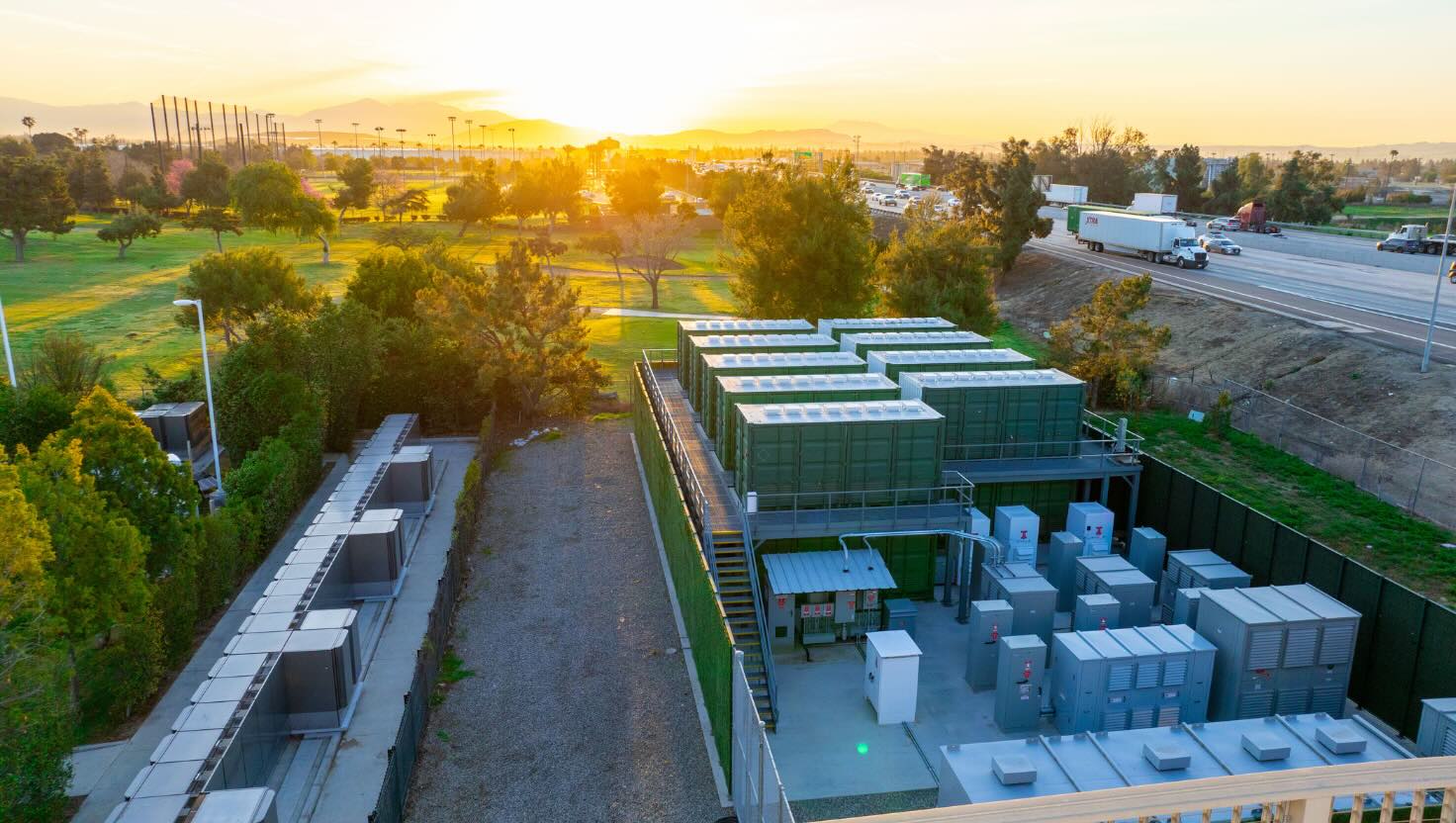
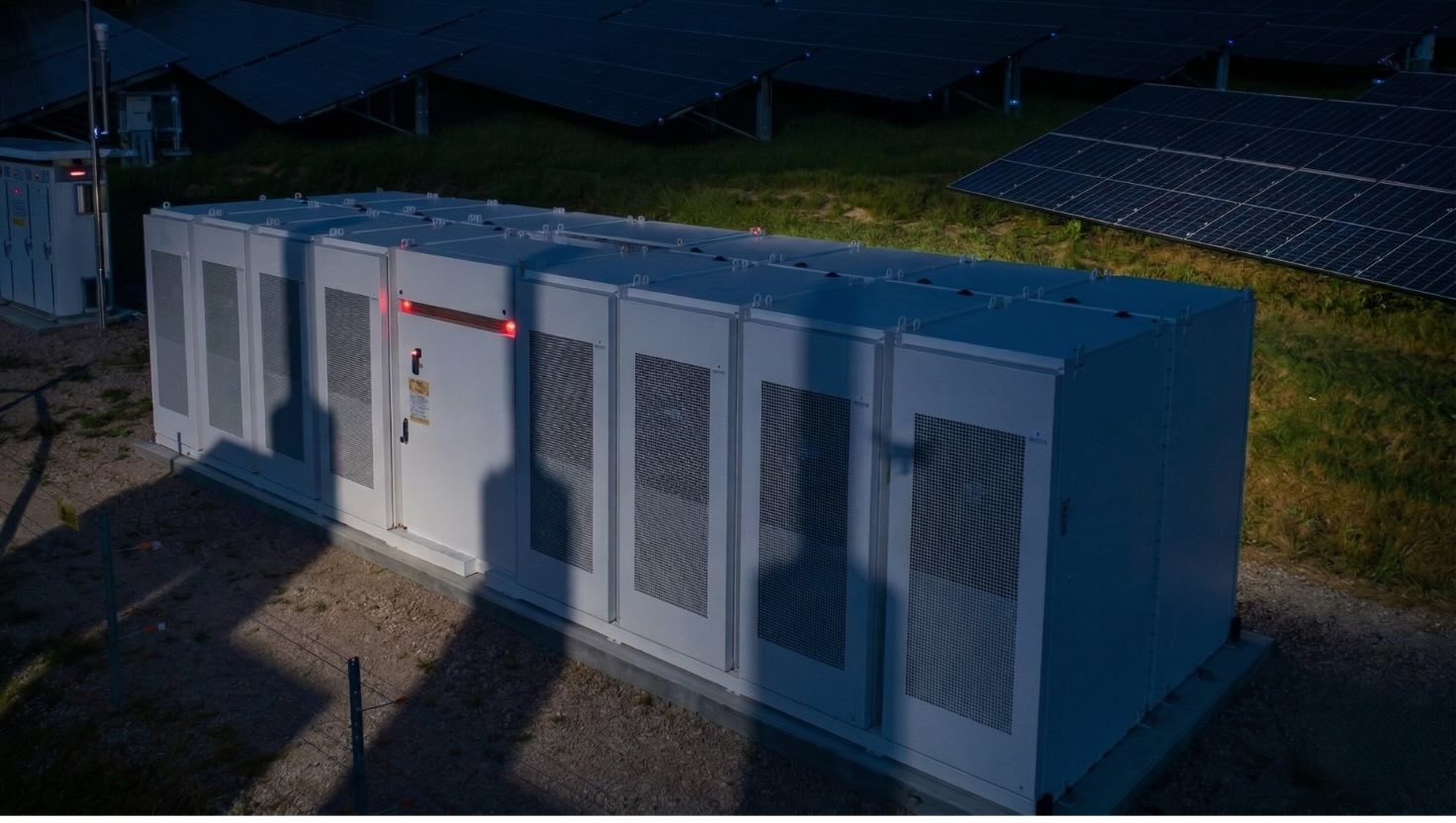
In case of power loss or voltage sag, the system automatically islands in milliseconds and operates chosen critical loads — line motors, drives, PLC, SCADA, control circuits, life safety/egress — using solar + battery, without generator-start delay. Grid-forming inverters will also seamlessly navigate power quality disturbances unseen by automatic transfer switches. In case there’s a generator available, the system will sequence it into smooth island operation.

Battery sizing that suits your production schedule

Resilience guarantees 1–4 hours of continuous power for critical loads; Endurance provides 4–12 hours of uptime. The appropriate sizing envelope is determined based on your shift schedule, outage duration in your region, and your tolerance level to downtime from your customers’ perspective. Sizing is a task performed in the Study stage (see the following section).

Which Faraday tier fits your manufacturing facility?

Discrete and shift-based → Faraday Resilience.

Designed for discrete manufacturing / shift manufacturing.
Solar power + energy storage + automatic backup of 1-4 hours for key loads. Perfect for factories with 1 or 2 shifts running discrete or batch operations, as the cost of a grid event during the shift can be expensive but there will still be an outage overnight.

Continuous-process and high-outage-cost → Faraday Endurance.

For continuous-process and high-outage-cost manufacturing.
Solar + storage + 4 to 12 hours of automatic backup for selected critical loads. Designed for manufacturers that operate on a 24/7 basis, which do not have downtime tolerance when the generators start, and where 4 to 12 hours of battery backup suffices for the local PSPS/storm event.
Need help deciding?

Not sure which fits?

This is precisely what the Faraday Feasibility Study addresses — your own particular shift schedule, outage tolerance, service level exposure to downstream customers, and even your demand charge profile will all impact the tier sizing.

What this looks like for two manufacturing facility profiles — a discrete shift-based plant and a continuous-process plant.

Manufacturing includes a broad spectrum – from a 500-kW discrete assembly plant operating in two shifts to a 5,000-kW continuous process plant operating round the clock. Two representative anchors have been placed side by side. Left hand column: discrete/shift based; Resilience. Right hand column: continuous process; Endurance. This is a directionally aligned example against Faraday’s Feasibility Study Sample.

Profile.

  • Rate schedule: PG&E B-19 Medium General Service.
  • Facility size: ~80,000 sq ft discrete-assembly / light-industrial plant.
  • Operating pattern: 2 shifts, 6am–10pm, Mon–Fri.
  • Annual peak demand: ~500 kW.
  • Annual consumption: ~2,400,000 kWh.
  • Annual utility bill (status quo): ~$650,000.
  • Annual demand charges: ~$200,000 (~31% of total bill).
  • Existing diesel backup: typically present, 50-hour/yr permit-runtime cap.

Faraday Resilience system concept.

  • Solar PV: ~600 kW DC class (rooftop primary).
  • Battery storage: ~750 kW / ~1,500 kWh usable.
  • Automatic islanding on selected critical loads: line motors and VFDs, primary PLCs and SCADA, process-control circuits, life-safety / egress. Critical-load category estimate: ~250 kW.
  • System scope per Resilience tier definition; pre-engineered and configurable.

Directional outcomes.

  • Year-1 Faraday PPA savings vs. status quo bill: ~$85,000.
  • Year-1 Equipment Lease savings: ~$50,000.
  • 20-year cumulative host savings: ~$3.0MM (Lease) to ~$3.4MM (PPA).

Profile.

  • Rate schedule: PG&E B-20 Primary Voltage.
  • Facility size: ~150,000 sq ft continuous-process plant.
  • Operating pattern: 24/7, three shifts.
  • Annual peak demand: ~1,500 kW.
  • Annual consumption: ~10,500,000 kWh.
  • Annual utility bill (status quo): ~$2,200,000.
  • Annual demand charges: ~$900,000 (~41% of total bill).
  • Existing diesel backup: typically present, regional permit-runtime constraints.

Faraday Resilience system concept.

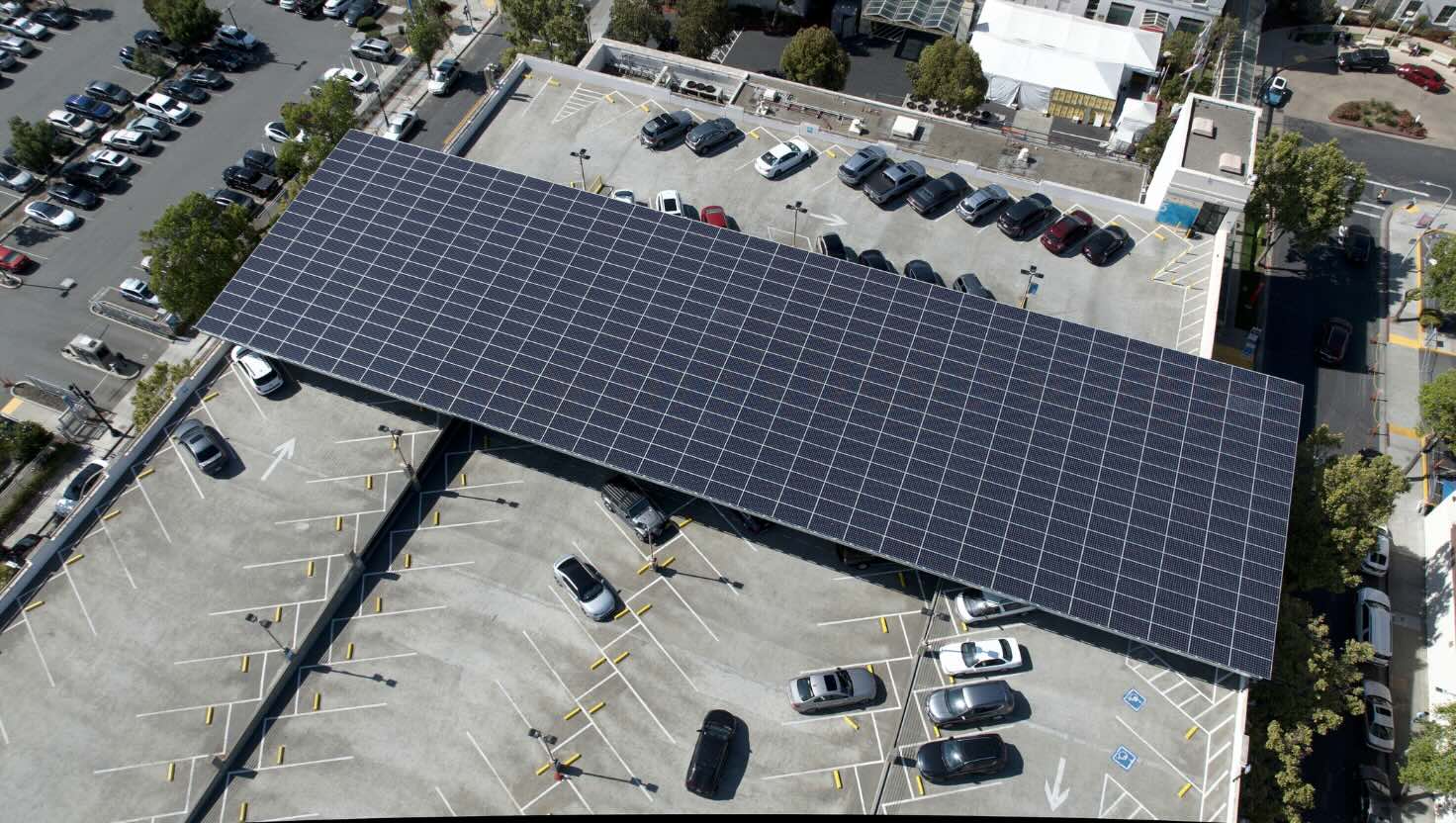
  • Solar PV: ~2,200 kW DC class (rooftop + carport).
  • Battery storage: ~3,200 kW / ~12,800 kWh usable.
  • Automatic islanding on selected critical loads: full line motors and drives, process-control circuits and SCADA, primary process equipment, life-safety / egress. Critical-load category estimate: ~900 kW.
  • System scope per Endurance tier definition; pre-engineered and configurable.

Directional outcomes.

  • Year-1 Faraday PPA savings vs. status quo bill: ~$300,000.
  • Year-1 Equipment Lease savings: ~$160,000.
  • 20-year cumulative host savings: ~$10.5MM (Lease) to ~$11.5MM (PPA).
  • Demand-charge reduction on covered peaks: meaningful share of the ~$900K annual demand-charge exposure.
  • Critical-load runtime during grid outage: 4–8 hours (configurable; Endurance envelope) — typically covers regional PSPS Tier 1 event window.
  • Financing structure: Faraday PPA terms in this range — [rate-range remains illustrative pending site-specific Study calibration]; Equipment Lease available.

Your plant falls within the range that exists between these two extremes. The Faraday Feasibility Study benchmarks against your true intervals, true rate structure, and true critical load envelope – and gives you the answer about the tier and size that make sense for you.

What the Faraday Feasibility Study will tell you that this webpage cannot.

The numbers above are directional. The Study makes them your numbers: the true load profile of your facility on your lines; the true time-of-use exposure of your shift schedule; the true rates from your utility, as currently charged; the properly sized system (Resilience or Endurance); and the financing offered by a real-life partner. It’s fixed fees. It’s fixed scope. It’s fixed timeline. Delivered as a written report that you can present to a board, to your CFO peers, or to your operations leadership team.

What we don’t do.

Faraday’s business levels are pre-engineered, fixed-scope, configurable, and appropriately sized for your installation. There are three areas we purposefully keep outside of that scope when working on manufacturing installations.

We don’t redesign your process or modify your control system.

Your process control logic, your PLC programming, SCADA implementation, MES interface, and line engineering remain the purview of your controls engineers and OEMs. The Faraday solution interfaces at the load shedding and islanding demarcation point where we provide clean energy into your existing process distribution system.

Diesel should not be considered as primary backup.

The reason we don’t suggest diesel is that if there is a generator in the system, its purpose is to stretch beyond the battery the runtime envelope and not act as the initial protection level. The California air districts (SCAQMD, BAAQMD, SJVAPCD and other) restrict the allowed runtime of diesel generators so that they cannot be used as primary backup despite the operator desire.

Facility expansion that you have not planned will not be considered when sizing.

We size for your existing demand profile plus a growth allowance that makes sense to us. If there is an expansion of your facility in the works or a change to continuous operation, the Study will point it out – it isn’t something we size for independently.

Ready to find out if a Faraday microgrid fits your manufacturing facility?

Start with a free 30-minute screening call. We’ll walk through your facility, your shift pattern, your rate schedule, your line’s critical-load envelope, and whether a Feasibility Study is the right next step.